
Booking transportation for a group — a family reunion, a conference delegation, a bachelor or bachelorette party, a sports team — through Dulles is a different problem than a solo airport transfer, and treating it the same way is where groups run into trouble. This guide covers how to size the right vehicle, what changes about airport pickup logistics for groups, and how group pricing actually works.
Why Group Transportation Needs Different Planning
A single traveler has one set of bags and one schedule to accommodate. A group multiplies both — more luggage, more preferences about seating, and often several flights landing at different times if the party is not traveling together. Planning a group trip means deciding upfront whether everyone travels in one vehicle or several, and coordinating pickup around the group’s actual arrival pattern rather than assuming a single flight number covers everyone.
Groups also tend to underestimate luggage. A family of six or a wedding party of ten with a normal amount of checked baggage needs meaningfully more cargo space than the passenger count alone suggests — sizing the vehicle by bags, not just seats, is the single most common correction we make when a group calls to book.
Matching Vehicle to Group Size
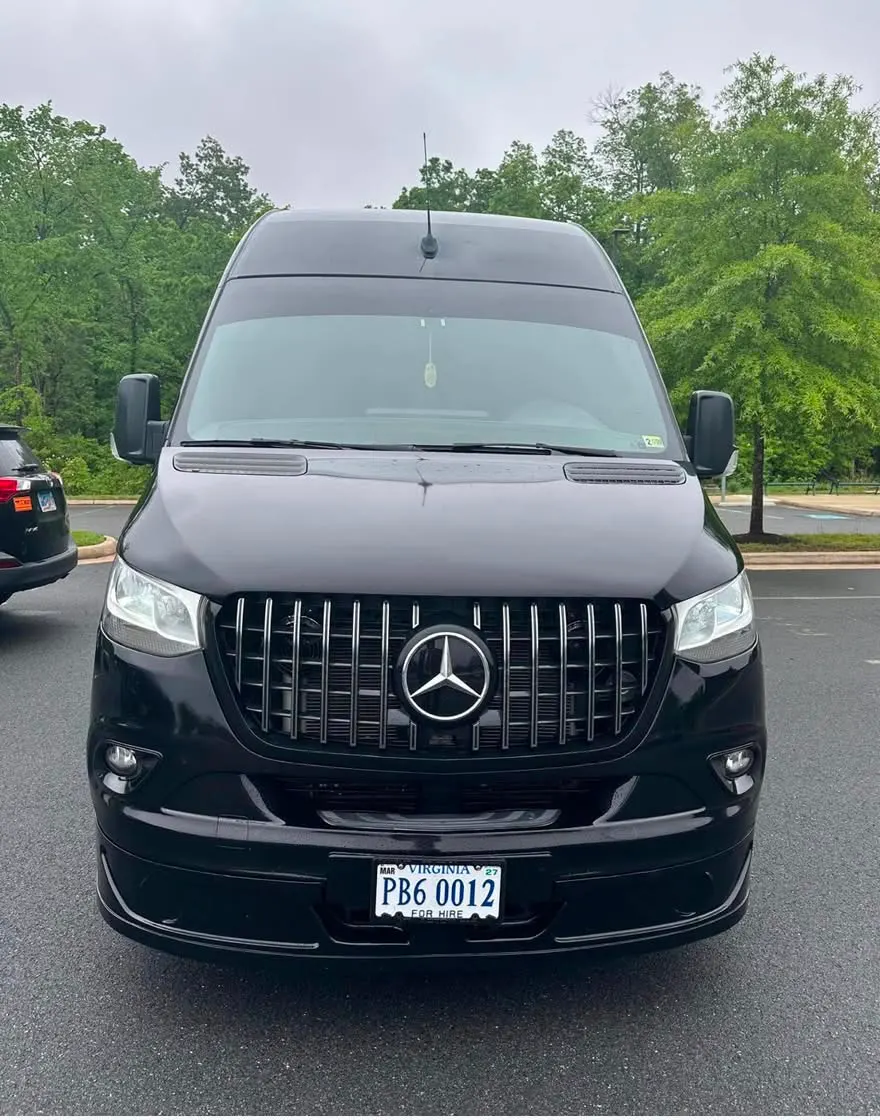
For four to six passengers with luggage, a full-size SUV — Cadillac Escalade or Chevrolet Suburban — is usually the right single-vehicle answer, seating the group together with room for a full set of bags. For larger parties, seven to thirteen passengers, a Mercedes Sprinter van keeps everyone in one vehicle rather than splitting into a multi-car convoy that has to coordinate separately at the airport.
For groups beyond thirteen, or when the party wants a specific event-style vehicle for part of the trip, multiple Sprinters or a stretch limousine paired with an SUV can be arranged — tell dispatch your total headcount and luggage, and they will recommend the combination that avoids leaving anyone or anything behind.
Airport Pickups for Groups: What Changes
When a group flies in on the same flight, one flight-tracked pickup covers everyone, with meet and greet a strong option so a chauffeur is waiting at baggage claim to help gather everyone’s bags in one place before walking to the vehicle. When a group arrives on staggered flights, coordinate pickups around each arrival rather than one fixed time — dispatch can stage multiple vehicles or sequence a single vehicle’s pickups if the landing times allow it.
Groups meeting at Dulles from different cities should share every traveler’s flight number at booking, not just one representative flight, so tracking covers the whole party and nobody is left waiting on their own.
Sports Teams, School Groups, and Chaperoned Travel
Youth sports teams, school groups, and other chaperoned parties add a layer most adult group bookings do not need to think about: confirming that vehicles and the booking process meet any organizational or school district requirements for group transportation, and that a designated adult chaperone’s contact information is on file with dispatch. Coordinating equipment — team bags, instrument cases, uniforms — alongside personal luggage is also worth flagging at booking so the right vehicle size is reserved from the start.
For a season or a recurring travel schedule, ask about setting up a simple standing arrangement rather than rebooking from scratch for every trip. A consistent provider who already knows the group’s typical headcount and equipment needs makes each subsequent booking faster and reduces the chance of a mismatched vehicle showing up on travel day.
Group Events Beyond the Airport Run
Group transportation frequently extends past the airport transfer itself — a Sprinter that meets the group at Dulles and then stays with them for a wine country day, a concert, or a multi-day conference schedule keeps logistics simple, since the same vehicle and chauffeur handle every leg rather than booking separate trips.
For events like concerts or games at regional venues, or multi-stop days around Northern Virginia, hourly as-directed service keeps the vehicle with your group for the whole outing, which is usually simpler to plan and more cost-effective than several point-to-point bookings stitched together.
Coordinating Multi-Day Group Itineraries
Groups visiting for several days — a reunion, a conference, a milestone celebration — often need more than a single airport transfer. Booking one provider for the whole itinerary, from initial pickup through daily transportation to a final departure run, keeps the group with a consistent fleet and chauffeurs who already know the party’s preferences rather than starting over with a new company each day.
For multi-day group trips, share the full itinerary at booking, even loosely — arrival day, event days, departure day — so dispatch can plan vehicle and chauffeur availability across the whole visit rather than treating each day as an isolated request.
Insurance and Safety for Group Travel
Moving a large group is exactly where licensed, insured transportation matters most — more passengers and more luggage raise the stakes of an under-equipped vehicle or an unlicensed operator. Confirm that any group vehicle you book is operated by a licensed carrier with commercial insurance appropriate to passenger capacity, and that child seats or booster seats are installed correctly if children are part of the group.
A single accountable chauffeur for the whole group, rather than several independently booked rideshares, also means one point of contact if plans shift mid-trip — useful when a group is trying to coordinate a schedule change across ten or more people at once.
Pricing a Group Trip
Group vehicles are priced as a flat rate for the vehicle and route, not per passenger — which is where group transportation often beats splitting into multiple rideshares once everyone’s fare is added up. An SUV or Sprinter flat rate covers the whole group in one number, confirmed before travel, with no per-seat surge pricing to multiply across the party.
For hourly or multi-stop group days, the rate is set for the reserved block of time, again as one flat figure for the whole group rather than a running meter per rider.
Communicating Changes When You Are Managing a Group
Group bookings are more sensitive to last-minute changes than solo trips simply because more people are affected by each adjustment. Designate one point of contact for the group — a trip organizer, a coordinator, a parent chaperone — who dispatch can reach directly if a flight status changes or a pickup needs to shift, rather than trying to coordinate through multiple individual travelers separately.
If the group’s headcount or luggage count changes between booking and travel day, update dispatch as soon as you know rather than waiting until pickup, since a vehicle upgrade or a second vehicle may need to be arranged, and that is far easier to do with a day or two of notice than at the curb, when the fleet available to substitute in is whatever happens to be free that hour rather than whatever fits the group best.
When a Group Should Split Into Multiple Vehicles
Not every group belongs in a single vehicle, even when one technically fits everyone. A large party with very different luggage loads per person, a mixed group where part is heading to a hotel and part to a different address, or a party larger than a Sprinter’s capacity all call for splitting into coordinated vehicles rather than forcing everyone into one. Dispatch can stage two SUVs or a Sprinter plus a sedan to leave at the same time and arrive together, which keeps the group experience intact even across multiple vehicles.
The deciding question is usually whether the group is actually traveling as one unit for the whole trip or just sharing a flight. A wedding party moving together all day belongs in one vehicle if it fits; a group of colleagues who happened to book the same flight but are heading to different hotels are often better served by separate, appropriately sized pickups.
Deposits, Confirmations, and Group Booking Timelines
Larger group and multi-vehicle bookings sometimes involve a deposit or a firmer confirmation timeline than a standard solo trip, simply because reserving a Sprinter van or multiple vehicles ties up more of the standing fleet in advance. Ask directly what the deposit and cancellation policy looks like for a group booking before you commit, especially for a date that also happens to fall during a busy period.
Get the group confirmation in writing with the full vehicle and headcount breakdown spelled out, not just a total passenger number — that written detail is what dispatch will actually staff the trip against, and it is the reference point if anything about the group’s plans shifts before travel day.
Booking a Group Vehicle
A few things to have ready when you call for a group booking:
- Total passenger count and total bag count
- Every traveler’s flight number, if arriving separately
- Whether the group needs one vehicle or a multi-vehicle combination
- Any additional stops planned beyond the airport pickup
- Whether meet and greet should apply to the group pickup
Related Pages
Frequently Asked Questions
What vehicle fits a group of eight with luggage?
A Mercedes Sprinter van comfortably seats up to thirteen with room for luggage, and is generally the right choice for any group above six passengers.
Can you track multiple flights for one group?
Yes — share every traveler’s flight number at booking, and dispatch can track each arrival and stage pickups accordingly, whether that means one vehicle sequencing multiple pickups or several vehicles arriving together.
Is group transportation priced per person?
No — group vehicles are priced as a flat rate for the vehicle and route, covering the whole group in one confirmed number rather than a per-seat charge.
Can the same vehicle stay with our group for the whole day?
Yes — hourly, as-directed service keeps one vehicle and chauffeur with your group for a reserved block of time, useful for airport pickup followed by a wine country day, event, or multi-stop itinerary.