
Every chauffeured booking starts with the same decision: sedan, SUV, or Sprinter van. Most travelers default to counting passengers and stopping there, which is how a family of four with six suitcases ends up trying to fit a sedan trunk, or a solo business traveler pays for SUV capacity they never use. Here is a practical way to actually make the call.
Start With Luggage, Not Just Passengers
Passenger count is only half the equation, and it is the half most people default to. A sedan comfortably seats up to three passengers, but its real limit is usually the trunk — two to three checked bags fits, a fourth often does not. Before booking by headcount alone, count your actual luggage, especially for a trip home from a week or two of travel where bags accumulate.
This single habit prevents the most common vehicle-mismatch problem: three travelers with six suitcases discovering at curbside that a sedan trunk simply will not close.
The Executive Sedan
A Mercedes-Benz E-Class or S-Class, or a BMW 7 Series, is the right call for one to three passengers with two or three checked bags — a solo business traveler, a couple, or a small family traveling light. It is the quietest, most private option and typically the most economical of the three vehicle classes.
The Full-Size SUV
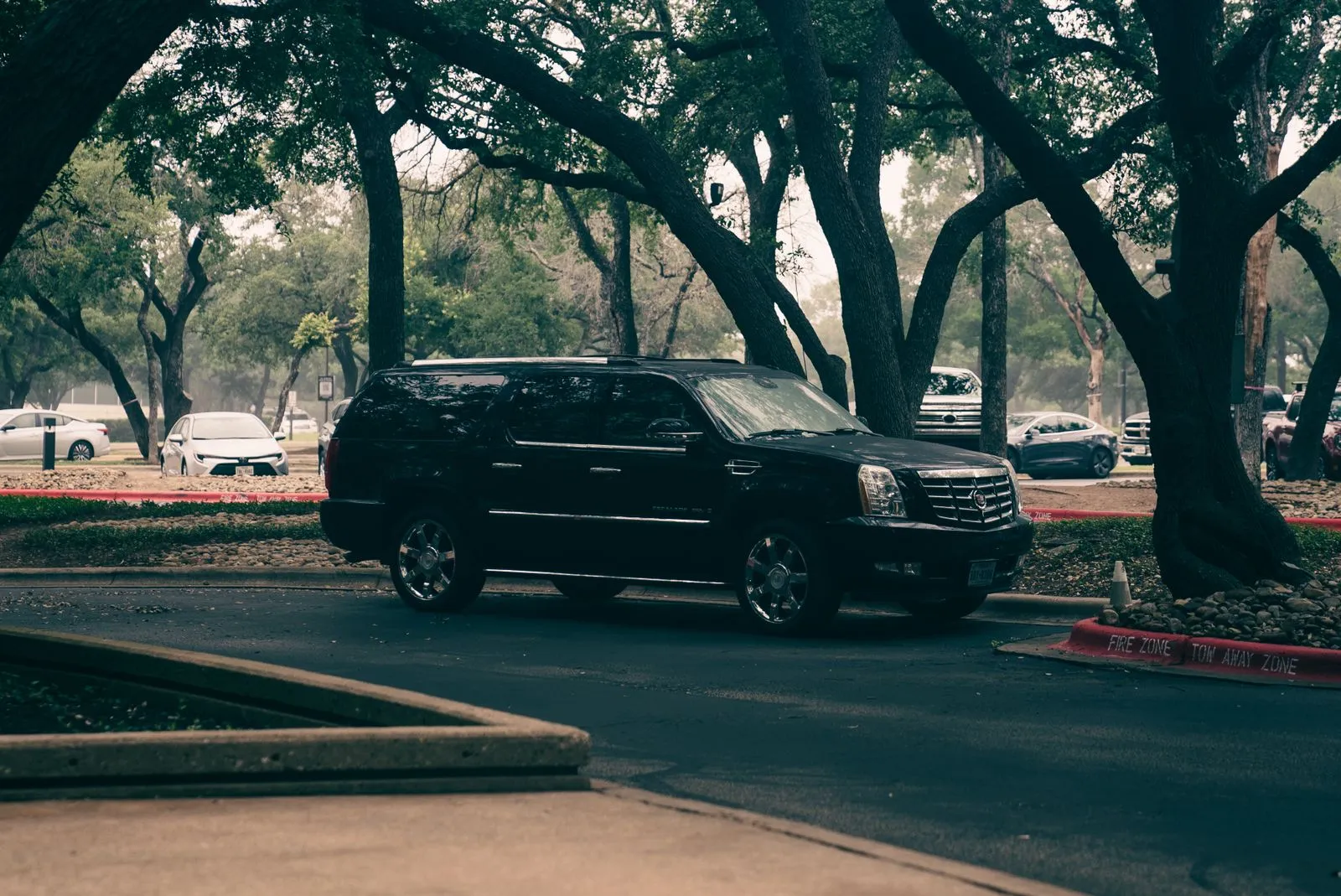
A Cadillac Escalade or Chevrolet Suburban seats up to six passengers with a full luggage load, making it the right choice for a family of four or five with a realistic amount of luggage, or a small group of colleagues traveling together with laptop bags and roller boards. It is also the practical choice for anyone who simply wants more room than a sedan offers, even with fewer passengers.
The Sprinter Van
A Mercedes Sprinter van moves up to thirteen passengers, making it the standard choice for wedding parties, conference delegations, bachelor and bachelorette groups, and any family or friend gathering large enough that splitting into two vehicles would mean the group is not actually traveling together.
Sprinters are also the right call any time keeping a group together matters more than the marginal cost difference — a group that arrives and departs as one unit rather than staggered across separate cars.
When to Round Up
If your trip sits right at a vehicle’s capacity limit, round up rather than assume it will just barely work. A family of six with a week’s worth of luggage technically might fit in an SUV, but a Sprinter removes any question and avoids a cramped, uncomfortable ride. The cost difference between vehicle classes is usually smaller than travelers expect, and comfort for the actual trip is worth more than the marginal savings.
Telling Dispatch What You Actually Need
When booking, state your passenger count and luggage count separately rather than assuming the dispatcher will infer bags from people. Mention any child seats, oversized items like golf clubs or a large stroller, or a wheelchair, since these affect vehicle sizing as much as an extra passenger would.
Booking the Right Vehicle
A good dispatcher will ask about luggage before confirming your vehicle — if one does not, volunteer the information anyway. Call (877) 609-1919 or book online, and tell us your real passenger and bag count so the vehicle that shows up actually fits your trip.
Related Pages
Frequently Asked Questions
How many bags fit in a sedan?
Typically two to three checked bags alongside up to three passengers. A fourth bag often will not fit comfortably, which is the most common vehicle-mismatch mistake.
What is the passenger limit for an SUV?
Up to six passengers with a full luggage load in a Cadillac Escalade or Chevrolet Suburban.
When should I book a Sprinter van instead of an SUV?
Whenever your group exceeds six people, or when keeping a larger group together in one vehicle matters more than the marginal cost of upgrading from an SUV.
Should I tell dispatch about child seats or oversized items?
Yes — mention child seats, golf clubs, large strollers, or wheelchairs at booking, since these affect the right vehicle size as much as passenger count does.